 Discovery call →
Deutsch
Discovery call →
Deutsch
I make legacy software understandable – for your team and for the AI tools that are meant to keep working with it. The basis is a proven standard method that I tailor to your codebase. Every statement in the documentation carries a source reference in the code.


Legacy software – software that has been in use for many years – carries knowledge that is written down nowhere. As long as the right people are in the building, hardly anyone notices.
Only one person still understands a core module. Every major change waits for them – and their retirement or departure is in sight.
New developers take a long time before they can make changes safely. The time to bring them up to speed is exactly what the experienced people lack.
A small fix in the wrong place once brought down features at a client’s site. Since then, some things are better left as they are.
For every part of the software it is clear what it does, what it depends on and where it sits in the code. A change of staff is no longer a risk to further development.
In conversation, they answer targeted questions that the analysis has selected in advance. They don’t have to write anything down.
Every statement points to a file and line. Anything that cannot be backed up appears in the documentation as an open question – nothing is guessed.
With the documentation, AI tools find the right place in the code. That makes your codebase the foundation for working with Intentron.
The method is proven and standardised. What gets adapted is what makes every piece of software different: programming languages, build environment and the format in which your team wants to use the documentation.
We establish whether the approach fits your situation and who holds the knowledge in your company.
A structured conversation with the people responsible, guided by a proven questionnaire. No access to your code is needed for this.
The standard method is tailored to your software. Your IT department checks the tools before they are used.
The documentation is built up over several analysis runs. In parallel, your knowledge holders answer the open questions.
You receive a written overview of your challenges and a concrete quotation for the documentation phase. If you commission the documentation phase, I credit the €1,500 in full.
A manufacturer with firmware that has grown over many years and across numerous repositories. The most experienced developer is about to retire, and much of the knowledge lies with him.
The analysis first separated the company’s own code from third-party and generated code – what remained was a fraction of the total. Over several runs, it produced documented descriptions of the modules and a question catalogue that the knowledge holder answers in conversation. Along the way, bugs in the code came to light that nobody had noticed until then.


If you wish, the entire analysis runs on your own infrastructure with an on-premises language model. I only use cloud models with your written sign-off and on the basis of a data processing agreement.
The tools read your code but never change it. Your ongoing development continues undisturbed throughout the documentation phase.
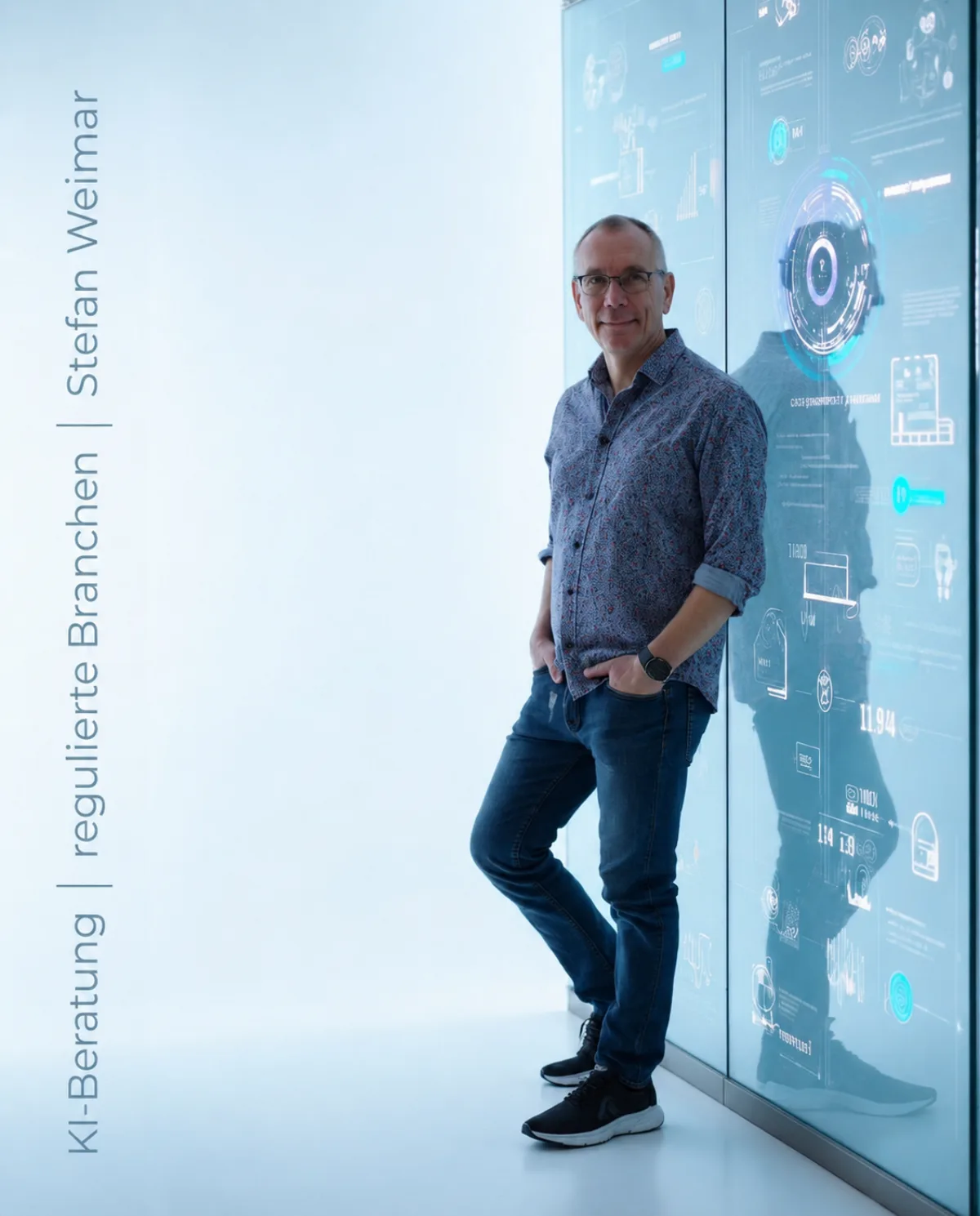
I am managing director of PRODOC Digital GmbH and a TÜV-certified AI consultant. My focus is safeguarding company knowledge with on-premises AI, especially in regulated industries.
Within the Intentron network, I am responsible for opening up legacy code: from the assessment and the tailoring of the method to the finished documentation. Your developers remain the subject-matter authority throughout.
No. The assessment is a conversation with the people responsible. Code is only read in during the documentation phase, and even then read-only.
That depends on the size and structure of the software. For a codebase with several thousand files of your own, expect several analysis runs over a few days. You receive a reliable estimate with the quotation after the assessment.
The standard method is adapted for each client to the languages and build environment in use. The assessment shows which adaptation your codebase needs.
If you wish, no code leaves your premises: the analysis then runs with an on-premises language model on your infrastructure. Cloud models are only used with your written sign-off.
Every statement must have a source reference in the code. Anything that cannot be backed up is marked as an open question and clarified with your knowledge holders. That way you never get documentation that sounds convincing but is wrong.
The assessment costs €1,500 plus VAT. You then receive a fixed-price quotation for the documentation phase; if you commission it, the assessment fee is credited in full.
In a free discovery call, we establish whether the assessment is worthwhile for you.
Once your codebase is documented, further development with AI can begin. You will find Intentron’s full offering on its own site.
Go to intentron.ai →When the data must not leave the building: consulting, architecture and implementation of AI systems that run entirely on your hardware – no cloud, no recurring API costs.
More on on-premises AI solutions →In the developer workshop, your team builds a working prototype in one to three days – with your code, in your infrastructure.
More about our workshops →